
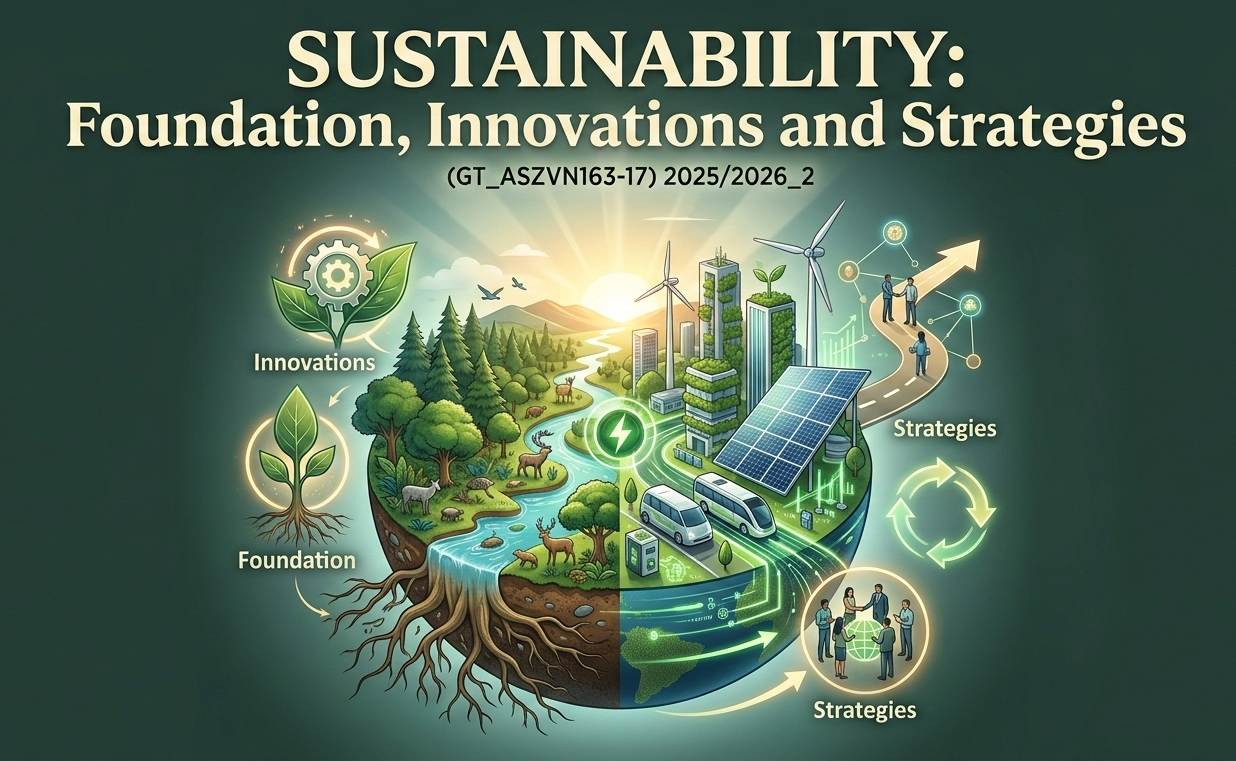
Sustainability: Foundation, Innovations and Strategies
Course Code: GT_ASZVN163-17 | Academic Year: 2025/2026_2
Instructor: Dr. Mohammad Fazle Rabbi
Course Overview
In an era defined by the "Great Acceleration" and an ecological footprint exceeding 1.7 Earths, the traditional business-as-usual model is no longer viable. This course provides a comprehensive roadmap for navigating the complexities of the 21st-century economy. Students will evolve from understanding the fundamental theories of sustainability to mastering the technical tools and strategic foresight required to lead regenerative organizations.
The curriculum is divided into three distinct pedagogical phases: Principles, Practices, and Future Strategies.
Phase 1: The Principles (Theoretical Foundations)
The first phase establishes the conceptual shift from shareholder primacy to stakeholder value. We move beyond "charity-based" sustainability into core business logic.
- Class 1: The Triple Bottom Line (TBL): An in-depth analysis of John Elkington’s framework—balancing People, Planet, and Profit to create long-term value.
- Class 2: UN Sustainable Development Goals (SDGs): Mapping corporate objectives against the 17 global goals to ensure alignment with international development priorities.
- Class 3: CSR vs. ESG: Deciphering the evolution from "Corporate Social Responsibility" (voluntary/narrative) to "Environmental, Social, and Governance" (metric-driven/investment-focused).
Phase 2: The Practices (Technical Tools)
Phase 2 transitions from "what" to "how." This phase introduces the quantitative and systemic tools used by industry leaders to measure and mitigate impact.
- Class 4: The Circular Economy: Moving from "Take-Make-Waste" to closed-loop systems. Understanding restorative and regenerative design.
- Class 5: Climate & Carbon Accounting: Introduction to Scope 1, 2, and 3 emissions, Net Zero pathways, and the mechanics of carbon footprints.
- Class 6: Life Cycle Assessment (LCA): A "cradle-to-grave" analytical approach to evaluating the environmental impact of a product throughout its entire life stages.
- Class 7: Sustainable Supply Chain Strategy: Managing global logistics with a focus on transparency, ethical sourcing, and resilience against climate disruption.
Phase 3: The Strategies (Future Readiness)
The final phase focuses on the "Green Swans"—the innovations and financial shifts that will define the next decade of global markets.
- Class 8: Energy & Tech Transitions: Analyzing the role of renewable energy, AI, and Green Tech in driving absolute decoupling of GDP from resource use.
- Class 9: Social Sustainability: Addressing the "S" in ESG. Focusing on human rights, labor equity, and the social license to operate in a globalized world.
- Class 10: Future Marketing & Sustainable Finance: Understanding Green Bonds, Impact Investing, and how to communicate sustainability authentically without "Greenwashing."
Learning Outcomes
By the conclusion of this course, students will be able to:
- Analyze corporate performance through the lens of the Triple Bottom Line.
- Apply LCA and Carbon Accounting methodologies to real-world business cases.
- Architect long-term strategies that reconcile economic growth with the nine Planetary Boundaries.
- Evaluate the financial risks and opportunities presented by the global transition to a low-carbon economy.
- Oktató: Rabbi Mohammad Fazle
